Urinary System Incontinence In Grownups Urology
Urinary System Incontinence In Adults Urology Neural pathways and urinary tract devices that keep continence might be typical. Urinary urinary incontinence is uncontrolled loss of pee; some specialists consider it existing only when a client thinks it is an issue. Many patients do not report the problem to their medical professional, and lots of physicians do not inquire about urinary incontinence particularly. Incontinence can occur at any age yet is a lot more common amongst older adults and women, impacting approximately 37% of older women worldwide (1) and about 15% of older males in the United States (2 ). These actions can increase stress, or pressure on your bladder, bring about involuntary urination. These physical motions are more probable to cause spontaneous peeing if your bladder is complete. Urinary feature is controlled by your brain and your urinary system bladder, which holds your urine in place up until you're ready to go. The bladder is held in place by your pelvic floor, which is the muscle mass located in your lower hips. Women are usually the caretakers, coordinators, problem-solvers, and psychological supports for everybody around them. They take care of households, professions, children, aging moms and dads, relationships, schedules, and responsibilities that seldom quit. This page has actually been examined for medical accuracy by Lara S. MacLachlan, MD . Whatever therapy option you select, make certain to track your development. NAFC makes this simple for you by using a new SUI Therapy Tracker, which tracks your signs and symptoms over a duration of 6 weeks.
Treatments For Necessity Incontinence
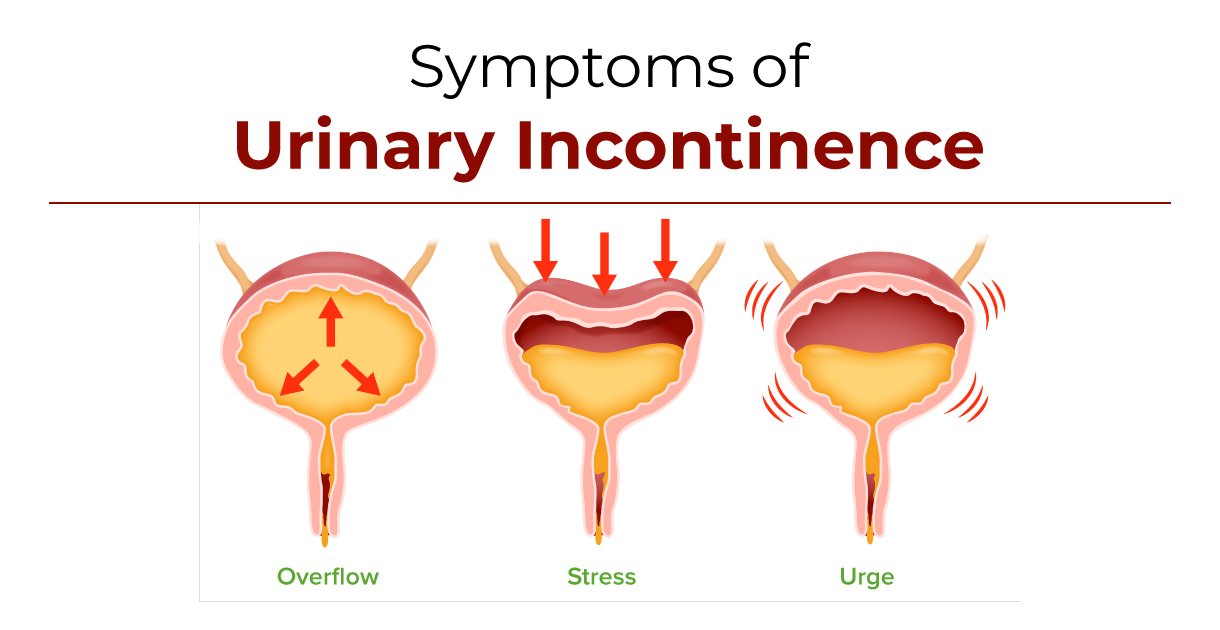
How do you know if you have anxiety or urge urinary incontinence?
stress incontinence & #x 2013; when urine leaks out at times when your bladder is under stress; as an example, when you cough or laugh. impulse (urgency) urinary incontinence & #x 2013; when urine leakages as you really feel a sudden, intense impulse to pee, or soon after that.
Comprehending Overactive Bladder
- This includes when you cough, laugh, sneeze, and/or activities of day-to-day living like pacing staircases, and so on.
- Medications, surgical procedure (4 ), various other procedures, or, in women, occlusive gadgets are likewise normally needed.
- Some treatments can be handled in the house, like dietary changes or treating constipation, which can contribute to nerve disorder that sets off urinary regularity.
- Though countless individuals struggle with SUI, there are no FDA-approved pharmaceutical medications to deal with the condition.
Are There Different Kinds Of Urinary System Incontinence?
And although this affects numerous ladies, only about one-third of them talk to a medical professional concerning it. It needs exact corporation of the nerves, muscle mass, and body organs that comprise the urinary system. Nerves and muscle mass must operate at exactly the right time for the bladder to hold or launch urine on command.A malfunction because process can let urine leak at the incorrect time, creating incontinence. The urologists at Holy place are experienced in taking care of a large range of bladder and urinary problems. If your bladder can not empty, that can cause health and wellness issues such as infections. However you do not have to endure in silence-- there are numerous treatment alternatives readily available. You do not need to endure in silence-- there are many treatment pelvic floor therapy options offered. Though similar, both various problems and their respective treatments are distinctly different. So, let's take a more detailed take a look at these two carefully relevant conditions. Recognizing the details of each can aid you uncover what you may be handling and what your provider can do to help you really feel better. Though countless individuals suffer from SUI, there are no FDA-approved pharmaceutical medicines to deal with the condition. If behavior adjustments do not aid, there are other alternatives to discover. We can try particular drugs that unwind your bladder muscular tissues and prevent leak. Botox, injected into the muscles of the bladder, can assist some patients briefly. And there are numerous medicines we can try, including anticholinergics, which obstruct the impulse to pee. Medications may likewise be required, as may recurring self-catheterization (eg, when postvoid residual volume is big). Occasionally, sacral nerve excitement, intravesical therapies, and surgery are used. In younger people, self-limited problems such as urinary system infection or vaginitis may create transient urinary incontinence. In such instances, urinary incontinence often starts unexpectedly, may create little leak, and generally resolves swiftly with little or no treatment.